


Elyra: AI English Coach
3.59.00 Reviews
App Specs
- Version
- 0.3.4
- Updated On
- License
- Free
- Downloads
- 1,000,000+
- Developer
- Astronex AI
- Categories
- Education
- Platform
- Android
Screenshots


 Analysis by AppCompare
Before opening another English-learning app, I’d decide what I want to change in my day-to-day speaking. Do I need to understand a grammar point, prepare for a test, or get less stuck when someone asks me a simple question? Those are different problems, and treating them as one can lead to a lot of tapping without much progress. Elyra: AI English Coach makes most sense to me when the goal is to practise producing language, not to replace every other way of learning.
That distinction is useful if you can follow English but take too long to answer. Elyra is an education app from Astronex AI, currently at version 0.3.4. It is free to download, with optional in-app purchases priced from $9.99 to $179.99 per item. Since that is a wide range, I’d start by seeing whether its practice fits my routine before considering a purchase.
Decide what kind of practice you need
I find it helpful to choose a speaking goal before deciding whether a conversation coach belongs in my routine. In this section, I’ll look at the difference between practising spontaneous answers and studying through a planned sequence, so you can tell which kind of work deserves your time. That choice also sets up a closer look at where Elyra’s conversational focus can be especially useful.
Speaking practice is the key decision
Before choosing Elyra, ask yourself what tends to stop you from improving. If you need help understanding grammar rules, preparing for a formal exam, or following a structured course from beginner to advanced, a lesson-led app or a teacher may suit you better. If you know plenty of words but struggle to retrieve them in conversation, practising responses is likely to be more useful than collecting another vocabulary list.
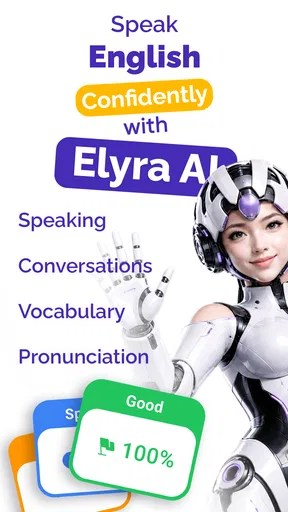
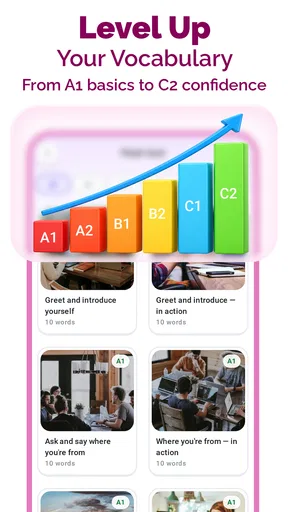
Elyra is built around real-life conversation practice and vocabulary development. In practical terms, that emphasis makes it easier to imagine using the app for small, repeatable speaking sessions: preparing to introduce yourself, explaining a familiar routine, or finding words for an everyday request. Those situations are more approachable than trying to hold a long, complicated conversation before you feel ready.
One useful way to judge whether this style works for you is to notice what happens after a session. Can you recall a phrase later when you need it, or did you simply get through the conversation? I would treat useful recall—not the number of minutes spent—as the better measure of progress. A conversation coach can create opportunities to practise, but the learner still has to revisit and use what they pick up.
Set realistic expectations for an AI coach
An AI conversation partner can be appealing if speaking with another person feels intimidating or inconvenient. You can practise without arranging a lesson or asking a friend to slow down. That lower-pressure starting point can help turn a vague goal like “speak better” into a manageable habit: choose a situation, attempt a response, and pay attention to the words you would like to use again.
Worth Reading Before You Choose

Baby Panda World Brings Quick Play to Modern Phones, but Its Game Library Feels Busy

ESPN’s Live Game View Makes Following Close Games Easier

QuizzLand Review: A Good Fit for Short Trivia Breaks, Not Every Player

Basketball Stars: Multiplayer Is Fast, but Can It Recover When Matches Go Wrong?

WEBTOON Turns Phone Updates Into a Better Reading Routine

Link to Windows Runs on Shared Habits, Not Social Feeds
Still, an AI coach is not a complete substitute for human conversation. A real person brings accents, interruptions, social cues, and the occasional misunderstanding that can make spontaneous talk difficult. I would use Elyra to build confidence and get more comfortable producing English, then look for human conversation as well if your goal involves meetings, travel, interviews, or friendships.
Check the practical fit before paying
The app is free, but the listed purchase range is broad enough that price deserves attention. I would explore the free version first and decide what you would need from a paid option before spending. In particular, consider whether you want regular guided practice, a particular learning routine, or simply an occasional place to speak. If the free experience already supports the habit you want, there is no reason to treat a purchase as the first step.
Elyra has a 3.5 average from 807 ratings, alongside 9 written reviews. That is a mixed signal rather than a reason to dismiss it or assume it will suit everyone. Ratings cannot tell you whether the app matches your learning style, so I would use them as a prompt to test the actual practice for yourself—especially before considering a higher-priced purchase.
Where Elyra makes the most sense
I’m most interested in whether practice carries into a real exchange, not simply whether a session feels engaging. This section looks at ways to connect a conversation prompt with a phrase you can reuse later, and how a small, specific goal can make practice easier to judge. From there, it’s worth considering the learners and situations where a different format has a clear advantage.
Turn small pockets of time into speaking practice
The strongest use case I see is a short session tied to an upcoming situation. Suppose you are on the bus before a day when you expect to speak English. Rather than browse unrelated lessons, you could practise how to describe your plans, ask for clarification, or explain a simple problem. Later, choose one phrase from that practice and try to use it in a real conversation. That small transfer from rehearsal to real life is more valuable than treating the app as a passive source of vocabulary.
Another useful approach is to practise the same topic from two angles. First, explain it in simple language, then try again with a more precise word or a longer answer. This is a way to make conversation practice work for different levels without assuming you need advanced topics from the outset. It also reveals whether a word is something you can actively use or merely recognise when you see it.
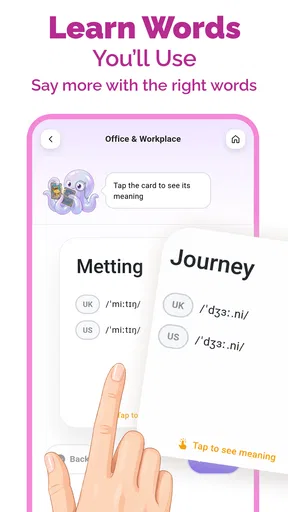
For learners who freeze while searching for vocabulary, the conversational focus may make practice feel more relevant than memorising isolated terms. Words learned while trying to express an idea have a clear purpose attached to them. I would keep a small personal list of expressions that felt useful and revisit them before a similar conversation. That simple routine gives the app’s practice a life beyond the session itself.
Use it to build confidence, not to chase perfection
Speaking practice can become discouraging if every imperfect sentence feels like failure. I would approach Elyra with one modest goal per session: finish an answer, try a new expression, or explain the same idea more clearly than last time. That keeps the emphasis on communication. It is also a sensible way to avoid turning a conversational tool into another source of pressure.
For someone who already reads and listens comfortably but rarely speaks, this distinction matters. More passive input may strengthen recognition without making spontaneous answers easier. Elyra’s focus gives that learner a reason to produce language. On the other hand, a complete beginner who needs careful explanations and a gradual introduction to basic structures may prefer a course that makes its sequence and teaching approach central.
What its popularity does—and does not—tell you
Elyra has over 1 million installs, which suggests it has reached a substantial audience. It is rated for Everyone and is free to install, so the initial barrier to trying it is low. Those details can help establish that it is a broadly accessible education app, but they do not tell you whether its conversation style or paid options are right for your specific goals.
The app was released on June 14, 2026, and its listed minimum operating-system requirement is Android 7.0. If you are choosing an app for a device you already own, checking that requirement first is a practical step. The version number, 0.3.4, is also worth keeping in mind when deciding how much you want to depend on it as your only learning resource; I would maintain other ways to practise rather than build an entire study plan around one app.
When another approach may serve you better
A speaking-focused app is not automatically the best answer to every English-learning problem. I’ll compare its role with course-based study and human conversation, especially when you need a planned curriculum, tailored correction, or the unpredictability of talking with another person. Those distinctions make it easier to decide what to keep in your routine before changing tools.
Choose a course app for structure
Some learners do best when each session follows a clearly staged curriculum. A structured course can make it easier to work through grammar, listening, reading, and vocabulary in a planned order. If you are preparing for a test or want a measurable sequence of topics, that category of app is likely to be a better fit than a tool whose defining emphasis is conversation practice.
The trade-off is that structured lessons may not give you as much room to practise answering in your own words. You may understand a rule but still need time to use it aloud. If that is your sticking point, Elyra can make sense alongside a course rather than instead of one: use the course to learn concepts and the coach to try expressing them.
Choose a tutor or language exchange for human interaction
A tutor is a stronger option when you need detailed correction, accountability, or preparation tailored to a specific goal. A language exchange can be useful when you want to hear how another person naturally responds and learn through a genuine back-and-forth. These choices take more coordination than opening an app, but they offer human judgement and social nuance that an AI practice partner cannot fully reproduce.
I would not see that as a reason to avoid Elyra. It can help you arrive at a lesson or exchange with a few ideas already practised, which may make it easier to start speaking. But if your main need is expert feedback on persistent mistakes, an app alone is unlikely to be the most efficient answer.
Consider whether the price fits your routine
The purchase range extends from $9.99 to $179.99 per item, so paid options should be judged against how often you expect to use them and what extra value you personally need. Do not assume that buying something will create a habit. I would first try to make a regular practice routine with the free option, then compare any purchase with alternatives such as a lesson, a course, or another learning resource you already use.
That comparison is especially important if you only need English for an occasional trip or a single short-term task. A recurring practice habit may justify investing in a tool, but a one-off need may be met more simply by preparing a few phrases and practising them with a person. Elyra is most compelling when you want ongoing low-pressure speaking practice, not just a quick answer to a temporary language problem.
Make the switch gradually
I prefer to test a new learning habit alongside the parts of my current routine that already work. This section offers a practical way to try conversation practice without losing useful study materials, while checking whether you can retrieve expressions in situations that matter to you. That gradual test gives you a fair basis for deciding whether to continue, adjust, or choose another approach.
Keep the useful parts of your current routine
Switching learning tools does not need to mean abandoning everything that already works. If you use a notebook, a vocabulary app, or a course, keep it for the job it does well and add Elyra specifically for speaking. This division helps you judge the app fairly: it is not expected to replace every form of study, only to fill the gap between knowing English and using it aloud.
A simple workflow is to pick one real situation, practise it in a short session, note a phrase you want to remember, and use that phrase later if the opportunity appears. If you are studying a topic elsewhere, bring it into a conversation rather than learning the same material twice in separate formats. That is a practical way to reduce friction and see whether the app is helping you transfer knowledge into speech.
After a few sessions, assess whether you are more willing to speak, whether you can retrieve useful vocabulary, and whether the practice feels relevant. If you are not getting those benefits, switching to a tutor, a structured course, or a human exchange may be a better use of your time. There is little value in sticking with an app simply because you have already installed it.
Make your practice easier to evaluate
One small habit can make the decision clearer: before a session, write down the situation you want to handle and one thing you find difficult about it. Afterward, note whether you could finish your thought and which expression you want to keep. This is not a scorecard for judging your accent or every grammatical slip; it is a way to see whether the practice addresses a real obstacle you face.
If you have only a few minutes, choose one narrow task rather than trying to cover a whole topic. Rehearsing how to ask someone to repeat a point, for example, gives you a phrase with an obvious use. On a day when you have more time, you can build on it by explaining why you missed something or asking a follow-up. That progression makes practice feel connected to actual conversations, without requiring a complicated study plan.
My recommendation
I would recommend Elyra: AI English Coach to learners who want a convenient, low-pressure way to practise spoken English and make vocabulary more usable. Its clearest strength is the focus on trying to communicate, which can complement lessons that are heavier on reading or drills. Begin with the free experience, bring real situations into your practice, and judge progress by what you can say afterwards—not by how many sessions you complete.
For a working learner, that might mean rehearsing a brief update before a meeting, then using one of the phrases when the conversation happens. For someone preparing for travel, it could mean practising a small request before leaving home. I would not expect a coach to remove every hesitation, but having tried to form the thought once can make it less daunting to say it again when the stakes are real.
Who should give it a try
Elyra is a sensible experiment for learners who already have some English to draw on and want a private place to practise turning it into speech. It may also suit someone whose schedule makes fixed lessons awkward, provided they can supply their own consistency. The Everyone age rating and free installation lower the barrier to trying it, while the optional purchases mean I would still check the value carefully before spending.
I would skip it as a primary tool if I needed a tightly sequenced beginner course, exam-specific preparation, or a person to diagnose recurring errors. In those cases, a course, teacher, or language partner is better matched to the task. My overall advice is to treat Elyra as a speaking-practice companion: try it with one concrete everyday goal, keep what helps, and move on if the conversation format does not address your actual learning gap.
Pros
- Offers flexible practice without needing to schedule a tutor.
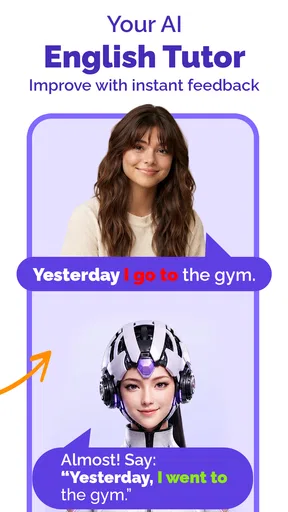
- AI feedback can help learners notice mistakes as they speak.
- Useful for building confidence through low-pressure conversation practice.
- Personalized sessions may adapt to a learner’s level and goals.
- Convenient for fitting short English practice into a busy day.
Cons
- AI feedback may miss context
- tone
- or subtle language errors.
- It cannot fully replace conversation with fluent human speakers.
- Speech recognition may struggle with accents or background noise.
- Some features or practice time may require a paid subscription.
- A stable internet connection may be needed for AI-powered sessions.
FAQs for Elyra: AI English Coach
What is Elyra: AI English Coach?
Elyra: AI English Coach is an app designed to help users practise and improve their English with AI-guided learning. Depending on the features available in your version, it may support activities such as conversation practice, vocabulary building, pronunciation work, or feedback on written and spoken English. Check the app’s current description and onboarding details to see which tools are included, since features and lesson formats can change with updates.
Is Elyra suitable for beginners, or do I need to know English already?
The app may be useful at different stages, but the best fit depends on the level options and learning activities it offers. Beginners should check whether Elyra provides basic lessons, clear explanations, and adjustable difficulty before starting. Learners with more experience may prefer open-ended conversation practice or detailed corrections. If you are unsure, try the introductory assessment or sample exercises, if available, and see whether the pace and feedback feel appropriate.
Does Elyra help with speaking and pronunciation?
Elyra is presented as an AI English coach, so speaking practice may be part of its learning experience. The results depend on what speech-recognition and pronunciation-feedback features are available in the current version, as well as your device’s microphone and recording conditions. Before relying on it for pronunciation training, review the feature list and test a short exercise. AI feedback can be helpful for practice, but it may not catch every accent or speaking nuance.
Is Elyra: AI English Coach free to use?
The app may be free to download while some lessons, practice time, or advanced tools require a subscription or in-app purchase. Pricing, trial availability, and included features can differ by platform, region, and app version. Check the Google Play or App Store listing and the subscription screen before signing up, paying particular attention to the renewal period, cancellation terms, and whether a trial converts automatically into a paid plan.
What information does Elyra collect, and does it work offline?
AI coaching features commonly need an internet connection to process prompts, speech, or written responses, so do not assume Elyra works fully offline; confirm this in the app’s listing or settings. If you use microphone or writing exercises, review the privacy policy to understand how audio, text, and account information may be handled. Grant only the permissions needed for features you intend to use, and avoid entering sensitive personal information into practice conversations.


